Book · 2018
Brief Answers to the Big Questions
Hawking's final book, published after his death in 2018: direct, plain-spoken answers on God, the beginning of the universe, AI, time travel and humanity's future.
Last updated 23 May 2026 · How we research
Book · 2018
Brief Answers to the Big Questions
Stephen Hawking
His final book: plain answers on God, AI, time travel and our future.
View on Amazon →Or listen (audiobook) →Affiliate links, a share supports MND research.
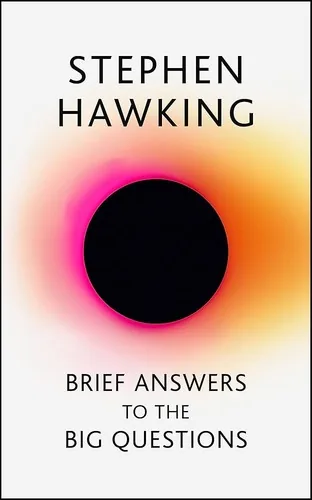
Published in October 2018, seven months after his death, Brief Answers to the Big Questions is Stephen Hawking's parting word. Assembled from his personal archive, speeches and essays by his family and colleagues, it gathers his considered answers to the questions he was asked most often across his life.
The big questions
The book is organised around ten of them, including: Is there a God? How did it all begin? Is there other intelligent life in the universe? Can we predict the future? What is inside a black hole? Is time travel possible? Will we survive on Earth? Should we colonise space? Will artificial intelligence outsmart us? And how do we shape the future?
His answers are characteristically plain-spoken. On God, he restates his view that the laws of physics leave no need for a creator. On the future, he is at once hopeful and warning: he was increasingly outspoken in his last years about the long-term risks facing humanity, urging serious attention to climate change, to the dangers and promise of artificial intelligence, and to the case for becoming a space-faring species as insurance against catastrophe.
A fitting last word
The book carries a foreword by Eddie Redmayne, who played Hawking in The Theory of Everything, and an afterword by his daughter Lucy. Reviewers welcomed it as an accessible and moving summary of his thinking, free of jargon and full of his characteristic wit and seriousness in equal measure.
Who it's for
If you want one book that distils how Hawking thought and what he believed, this is it. It is the most accessible of his works, requires no prior reading, and serves as a natural counterpart to the page on how his mind worked.