02 / Life
The Life of Stephen Hawking
From a wartime birth in Oxford to Westminster Abbey, the story of a man given two years to live who lived another fifty-five.
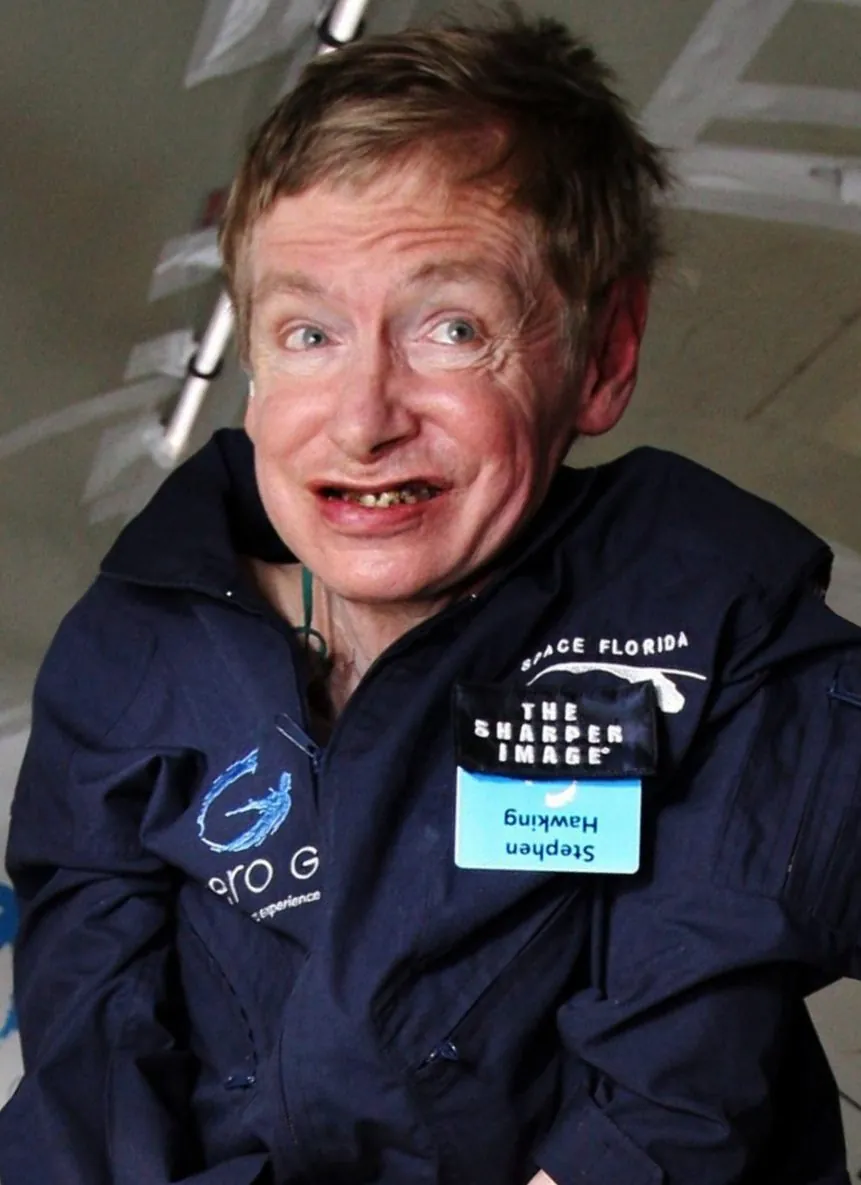
Stephen William Hawking was born in Oxford on 8 January 1942 and died in Cambridge on 14 March 2018. Between those dates lies one of the most improbable lives in modern science.
It is a life of sharp contrasts. A clever but unremarkable schoolboy who coasted through Oxford became, at Cambridge, one of the most original cosmologists of his generation. A young man handed a death sentence at twenty-one went on to hold Isaac Newton's old chair, write a book read by millions, and become the most famous scientist in the world. A body that failed him almost completely housed a mind that ranged across the entire universe.
The pages below tell that story in full: his early life and education in St Albans and at Oxford and Cambridge; the diagnosis of motor neurone disease that should have ended everything, and the slow, near-miraculous course it took instead; his career at Cambridge and the discoveries that defined it; his family and personal life, as human and complicated as anyone's; and his death and interment among the greatest scientists Britain has produced.
For a quick chronological overview, see the timeline; for the science itself, the discoveries; and for the honours and influence he left behind, legacy and honours.
See also the technology that let him work.
Early Life & Education
A wartime birth in Oxford, an idiosyncratic St Albans childhood, and the Oxford and Cambridge years that turned a famously idle student into a cosmologist.
Read →The ALS Diagnosis at 21
Early in 1963, doctors told a twenty-one-year-old Stephen Hawking he had a form of motor neurone disease and perhaps two years to live. What happened next defied medicine for fifty-five years.
Read →Career & the Cambridge Years
From a young researcher under Dennis Sciama to the Lucasian Professor in Newton's chair: four decades at the centre of theoretical physics, and the discoveries that defined them.
Read →Family & Personal Life
Two marriages, three children, and a private life as human and as complicated as the public one was luminous, told plainly and without sensation.
Read →Death & Interment at Westminster Abbey
Stephen Hawking died on 14 March 2018, Pi Day and the anniversary of Einstein's birth, and was laid to rest at Westminster Abbey between Isaac Newton and Charles Darwin.
Read →Stephen Hawking's PhD Thesis
Hawking's 1966 doctoral thesis, 'Properties of Expanding Universes', laid the groundwork for his career. When Cambridge released it free online in 2017, demand crashed the servers.
Read →Stephen Hawking's Activism & Public Life
Hawking used his fame for causes he believed in: defending the NHS that kept him alive, championing disability rights, and speaking up for science. The advocate behind the physicist.
Read →The Technology That Let Stephen Hawking Work
How did Stephen Hawking write papers and books once he could no longer move or speak? A deep dive into his wheelchair, his cheek-switch, the ACAT software and the Intel collaboration.
Read →