His Mind
How Stephen Hawking's Mind Worked
The thinking habits behind the physics: how losing the ability to write reshaped Hawking into a visual reasoner, and the five mental moves that defined his work.
Last updated 23 May 2026 · How we research
Most accounts of Stephen Hawking dwell on what he discovered. Fewer ask how he thought, and that is the more unusual story, because his way of thinking was shaped by a constraint no other great physicist of his era faced. For most of his career, Hawking could not write. He could not scribble an equation, fill a blackboard, or work a problem out on paper in the ordinary way. So he learned to do it all in his head.
That single fact changed the shape of his mind. It made him a geometer rather than an algebraist, someone who reasoned in pictures and structures rather than long chains of symbols. It forced him to compress, to hold whole problems in working memory, and to ask one enormous question rather than a hundred small ones. Below are five habits of thought that recur across his life and work. They are not a formula; they are a portrait.
1. He reasoned in structures, not symbols
Because he could not write equations down, Hawking trained himself to manipulate complex mathematical objects entirely in his mind. Colleagues described him picturing the geometry of a black hole or the curvature of spacetime the way most people picture a familiar room, turning it over, testing it, and only committing to paper, through an assistant, at the very end.
This was not merely a workaround. It pushed him towards the kind of physics where a clear mental picture does the heavy lifting, and it may be part of why his contributions so often took the form of a single, graspable insight rather than a forest of calculation. He understood the shape of a problem first; the algebra came afterwards.
2. He chose the biggest possible question
Faced with a problem, the ordinary scientific instinct is to narrow: more data, more detail, a smaller and more tractable case. Hawking's instinct ran the other way. Where did the universe come from? What happens to information that falls into a black hole? Does the universe need a beginning at all? He consistently reached for the question one level up, the one that, if answered, would dissolve the smaller questions beneath it.
Stated simply, his goal never changed across decades: a complete understanding of why the universe is as it is, and why it exists at all. Almost everything he did was a special case of that single, outsized ambition.
3. He worked the seam between incompatible ideas
Hawking's defining discovery came from doing something that was not supposed to work. He took quantum mechanics, which governs the very small, and general relativity, which governs the very large, and forced them to operate in the same place at once, the edge of a black hole, where neither theory was comfortable. The breakthrough lived in the seam between two frameworks that the rest of physics kept carefully apart.
It is a habit worth naming, because it is general. The most valuable insights often sit on the boundary between two things that are each "obviously true" but cannot both be fully true at once. Hawking did not resolve such contradictions away. He sat inside them, because the contradiction was where the new thing was hiding.
4. He staked positions in public, and changed his mind
Hawking made wagers on open scientific questions: with Kip Thorne over whether a particular object was a black hole, with John Preskill over whether information survives one. These were not stunts. A public bet forced him to commit to a falsifiable position, and when the evidence eventually turned against him on the information question, he conceded, openly, and with good humour. He treated being proven wrong as the system working, not as a personal defeat.
There is a quiet lesson in that. The willingness to make a belief concrete, to expose it, and then to update it without ego is rarer and more valuable than confidence. Hawking had both the nerve to bet and the honesty to lose.
5. He treated simplicity as the final achievement, not the starting point
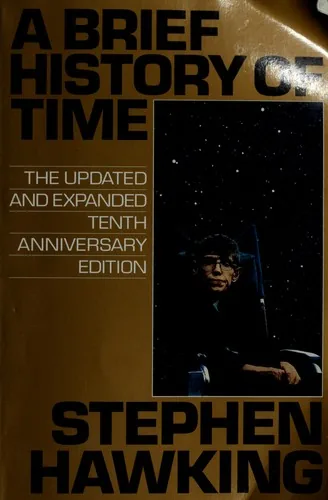
When Hawking wrote A Brief History of Time, he was warned that every equation he included would halve his readership. He cut all but one. The book went on to sell in numbers no popular science book had managed, not because he had watered the ideas down, but because he had done the far harder work of making the genuinely difficult genuinely clear.
He understood that clarity is the last thing you earn, not the first thing you assume. Anyone can produce the complicated version; it is just the unprocessed contents of one's own head. The simple, accurate, vivid version is the proof that the thinking is finished. Across his books, his lectures and his famous one-liners, that discipline is everywhere.
The thread that runs through all five
Underneath the habits is a temperament. Hawking refused to accept "the laws break down here" as a final answer, whether here meant the centre of a black hole or the first instant of time. He was given every reason to think small, about his prospects, his health, his time, and chose, deliberately, to think as large as it is possible to think.
His own advice, offered to anyone facing hard circumstances, doubles as a description of how he worked:
However difficult life may seem, there is always something you can do and succeed at.
That is not a sentiment about physics. But it is, in the end, the same mind at work.
Want to put this way of thinking to work? Hawking's reasoning patterns are also available as an installable Claude Skill for Claude, ChatGPT and any LLM.
See also his readiness to concede famous bets when proved wrong, and his documented views on the big questions.