Book · 2007
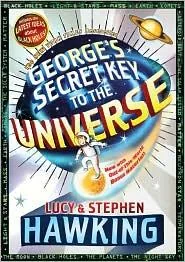
George's Secret Key to the Universe
The warm 2007 children's series, co-written with daughter Lucy Hawking, that smuggles real, carefully checked cosmology into a set of space adventures.
Last updated 23 May 2026 · How we research
Book · 2007
George's Secret Key to the Universe
Lucy & Stephen Hawking
Real cosmology smuggled into a children's adventure, co-written with his daughter.
View on Amazon →Or listen (audiobook) →Affiliate links, a share supports MND research.
George's Secret Key to the Universe, published in 2007, is the first in a series of children's books Stephen Hawking wrote with his daughter Lucy Hawking, herself a journalist and author. They are the warmest things he put his name to, and a lovely way to introduce young readers to the universe he spent his life explaining.
The story, and the science
The series follows a boy named George, his scientist neighbour Eric, Eric's daughter Annie, and a supercomputer called Cosmos that can open windows and doorways onto anywhere in the universe. Through a set of adventures, escaping black holes, touring the solar system, witnessing the birth of the cosmos, George encounters real astrophysics.
What sets the books apart is that the science is genuine and carefully checked. Interspersed with the story are clear factual sections and striking photographs of space, so that young readers absorb accurate ideas about planets, stars and black holes alongside the adventure. The result manages the difficult trick of being a proper story and a proper introduction to science at the same time.
A family project, and a series
The first book was followed by several sequels, including George's Cosmic Treasure Hunt and George and the Big Bang, continuing the blend of narrative and real cosmology. The collaboration with Lucy was a genuine partnership and a happy late chapter in their relationship, drawing on Hawking's lifelong conviction that the universe should be made comprehensible to everyone, including the very young.
Who it's for
These are for children, roughly of primary and early secondary age, and for the adults who read with them. If you want to share Hawking's universe with a curious young reader, this is the place to begin.