Discoveries
What Did Stephen Hawking Actually Discover?
A plain-English summary of his real scientific contributions, black hole radiation, the singularity theorems, black hole thermodynamics, and the popular myths about them.
Last updated 23 May 2026 · How we research
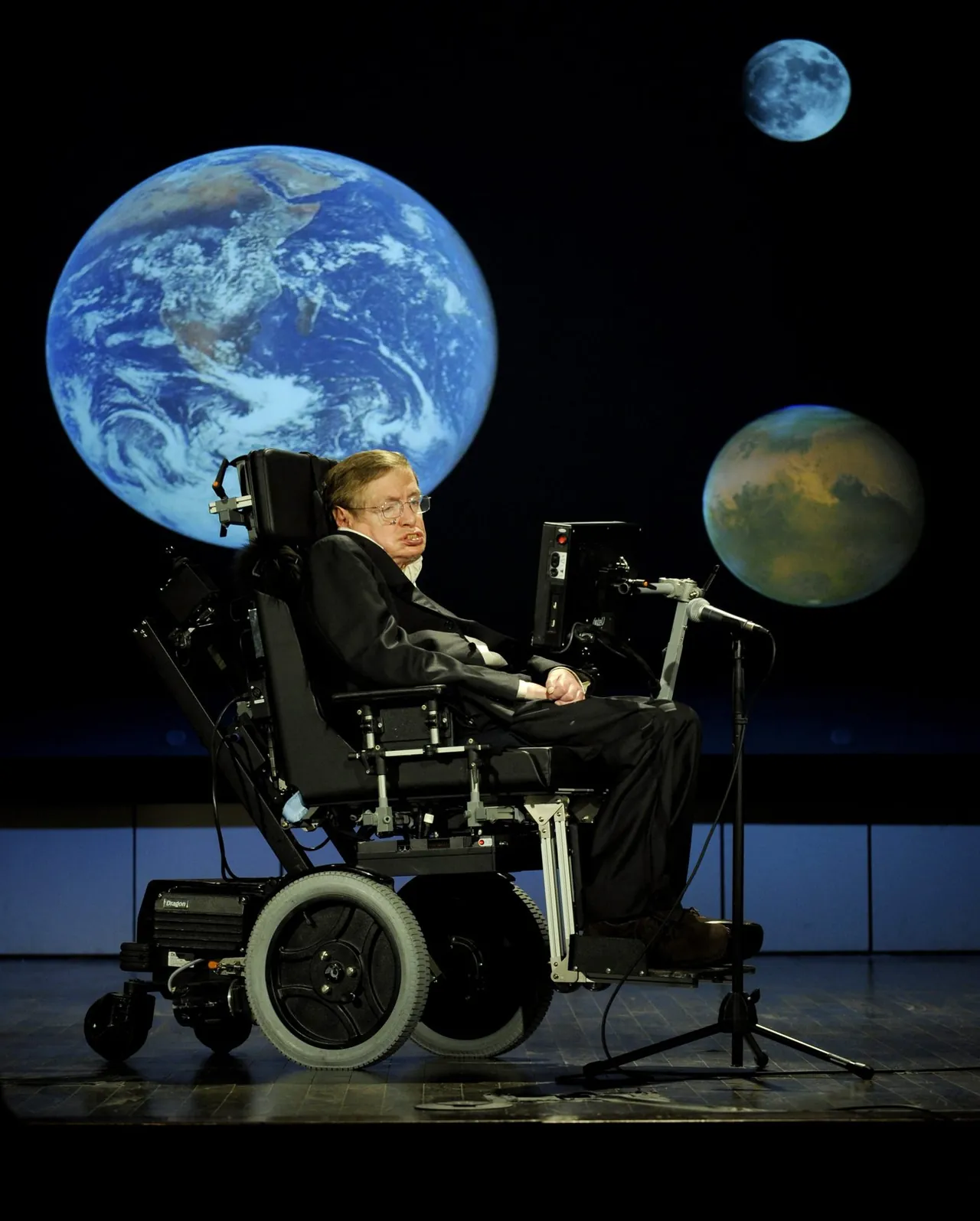
Stephen Hawking's single most important discovery is Hawking radiation: the 1974 prediction that black holes are not completely black, but slowly emit radiation, gradually lose mass, and can eventually evaporate entirely. Alongside it sit three other major contributions: the singularity theorems he proved with Roger Penrose, his work establishing the laws of black hole thermodynamics, and the black hole information paradox that his own radiation result created. He was not, despite the popular image, the man who discovered black holes or the Big Bang. He was the man who worked out the strange and beautiful rules they obey.
Below is each of those contributions in plain English, followed by the myths worth clearing up.
1. The singularity theorems (1965–1970)
Hawking's first major work, much of it done with the mathematician Roger Penrose, asked a deceptively simple question: does Einstein's theory of general relativity actually require singularities, points where space, time and the laws of physics break down, or are they just artefacts of tidy, idealised models?
The answer they proved was that singularities are unavoidable. Under very general and realistic conditions, general relativity predicts that a collapsing star must form a singularity at the centre of a black hole, and, running the logic backwards, that the expanding universe must have emerged from a singularity in the past. That second result is the rigorous mathematical backbone of the Big Bang: not a vague story about an explosion, but a proof that, taken at face value, our best theory of gravity says the universe had a beginning. Penrose received a share of the 2020 Nobel Prize for this line of work; Hawking, who had died in 2018, was no longer eligible.
2. Hawking radiation (1974)
This is the discovery that carries his name, and the one historians of science will remember. Before Hawking, the consensus was that nothing could ever escape a black hole. Hawking showed that this is not quite true once you take quantum mechanics into account.
When you apply the rules of quantum theory to the empty space just outside the event horizon, the black hole turns out to glow very faintly, like a warm object, with a real temperature. Over unimaginable spans of time it radiates its mass away and shrinks. Smaller black holes are hotter and evaporate faster; a truly tiny one would end its life in a burst of radiation.
The reason this mattered so much is that it forced three areas of physics that normally never speak to each other (gravity, quantum mechanics and thermodynamics) to agree on a single object. For the first time, a black hole had a temperature and an entropy you could write down. (You can read the full explanation on the dedicated Hawking radiation page.)
3. The laws of black hole thermodynamics
Hawking radiation did not appear from nowhere. In the early 1970s Hawking proved his area theorem: the total area of a black hole's event horizon can never decrease. That sounded abstract until people noticed it behaved exactly like entropy, the quantity in thermodynamics that never decreases. The physicist Jacob Bekenstein proposed that a black hole's entropy really is proportional to its surface area, and Hawking's radiation result later supplied the missing piece, fixing the exact relationship now known as the Bekenstein–Hawking entropy.
Together these results created a complete set of laws for black holes that mirror the laws of thermodynamics. It is one of the deepest hints physicists have that gravity, quantum theory and information are secretly the same subject, and it underpins much of theoretical physics today, from string theory to the study of quantum information.
4. The information paradox
Hawking's greatest discovery handed him his hardest problem. If a black hole radiates its mass away and finally disappears, what happens to all the information about everything that ever fell in, every book, star and atom?
The iron rule of quantum mechanics is that information is never destroyed. But Hawking's original calculation suggested the escaping radiation is featureless and random, carrying none of that information with it. If so, when the black hole vanishes, the information is simply gone, which quantum theory says is impossible. This black hole information paradox became one of the central unsolved problems in physics. Hawking himself argued for years that information was lost, famously conceded a bet on the question in 2004, and kept revising his position. It remains unresolved, and you can read more on the information paradox page.
5. The origin of the universe
Hawking spent much of his later career trying to describe the universe's beginning without the law-breaking singularity his own theorems had predicted. With James Hartle he proposed the no-boundary idea: that if you handle time near the Big Bang in a particular mathematical way, the universe has no sharp starting edge at all. Asking what came before it, he liked to say, would be like asking what lies south of the South Pole. He also did important early work showing how tiny quantum ripples in the infant universe could have grown into the galaxies we see, a contribution to the theory of cosmic inflation that is sometimes overlooked.
The myths worth clearing up
He did not discover black holes. The idea long predates him; the term itself was popularised in the 1960s. Hawking discovered crucial things about them.
He did not invent the Big Bang theory. That belongs to figures like Georges Lemaître and George Gamow decades earlier. Hawking's contribution was to prove, mathematically, that general relativity demands such a beginning.
He never won a Nobel Prize, and that is not an oversight. The Nobel committee requires experimental confirmation. Hawking radiation from a real black hole is far too faint ever to have been detected, so his central prediction remains unverified. It is widely believed that a direct detection would have won him the prize immediately.
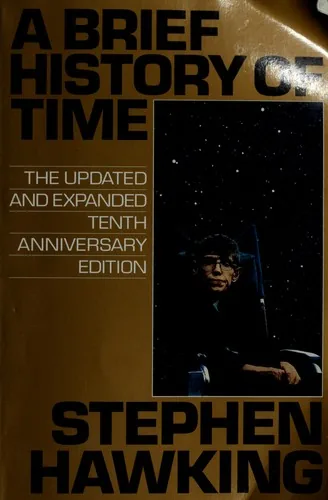
His fame and his hardest science are not the same thing. A Brief History of Time made him a household name, but his deepest work (the radiation, the thermodynamics, the paradox) is known mostly to physicists. The popular image of a lone genius also undersells how collaborative his best work was, with Penrose, Hartle, Bekenstein and others.
What makes Hawking exceptional is not any single equation. It is that he repeatedly chose the hardest available question (the centre of a black hole, the first instant of time) and refused to accept "the laws break down here" as an answer.